
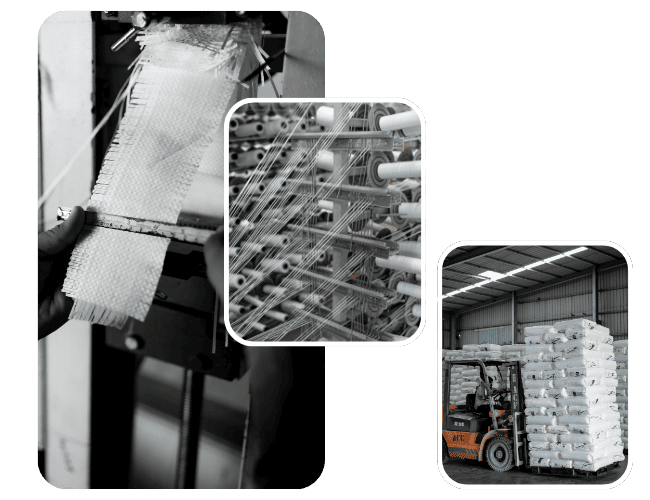
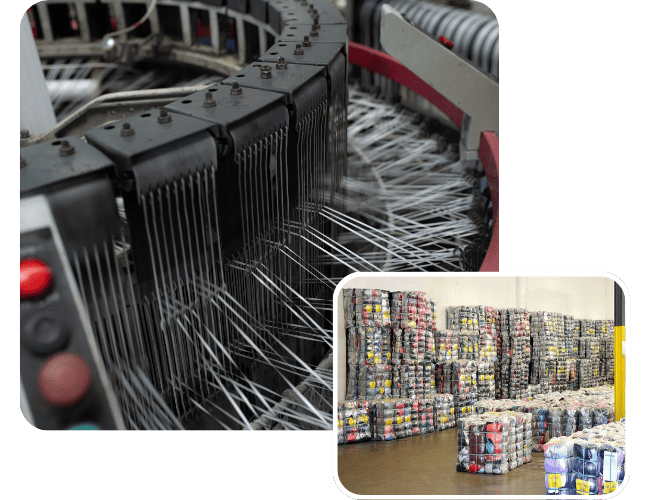
The process begins with feeding the polypropylene resin pellets into an extruder which in turn forms a thin layer film that undergoes cutting with the help of cutters forming small tapes. These tapes undergo heat and stretching treatment resulting in increased strength and reduced width, eventually getting wound across a small pipe now called bobbin.
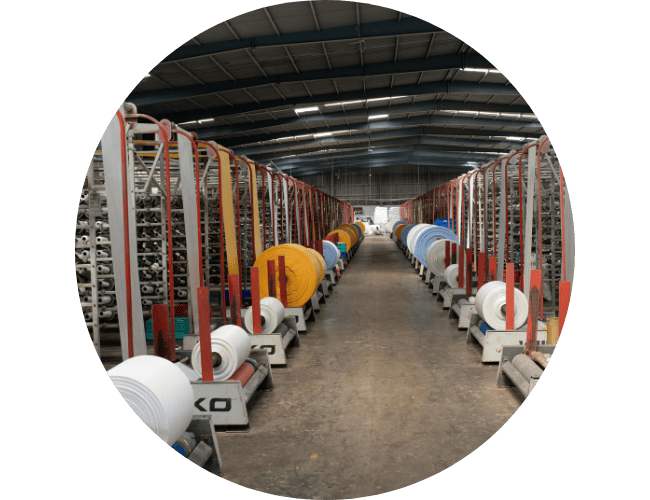
Set number of bobbins are arranged in a particular manner in conformity with the mesh count needed in the fabric. The smooth release of tapes from the bobbins result in a fascinating movement of tapes getting weaved across forming a fabric which eventually gets wound around in a roll.
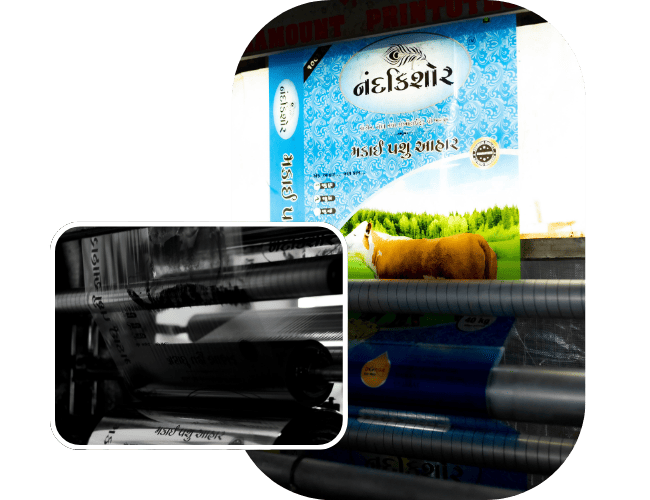
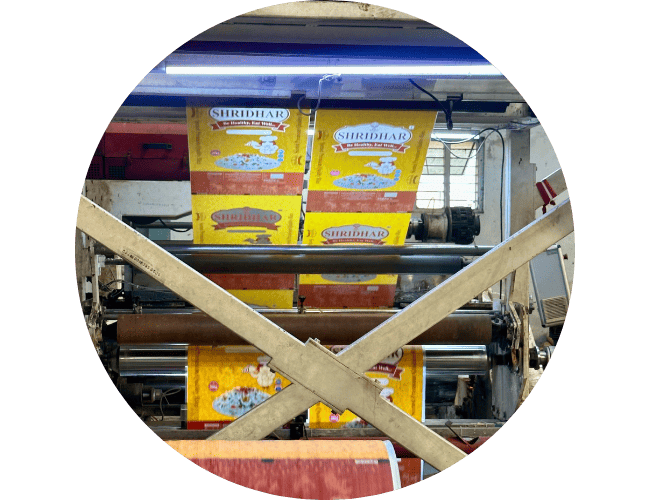
A flexible, photopolymer plate raised from the surface of the plate on the areas to be inked, is wrapped around a rotating cylinder for each corresponding color required in the design. The fountain roller delivers ink to the anilox roller that is used to transfer a uniform thickness of ink to flexible printing plate cylinder. The ink is thus impressed on the substrate as it passes between the plate cylinder and the impression roller.
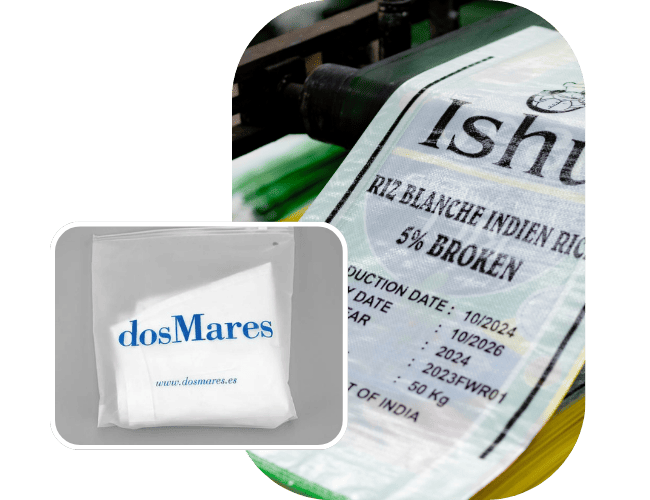
Biaxially oriented polypropylene rolls formed by similar process as fabric rolls, undergo intaglio printing with the help of an electronic engraved cylinder in contact with the ink fountain that makes an impression on the substrate with the help of the impression roller. Substrate undergoes drying with the help of a drier before coming in contact with the succeeding cylinder. There can be multiple engraved cylinders fed with various coloured inks corresponding to the design.
Extruding relative proportion of polypropylene and low density polyethylene resin pellets results into a hot thin film which falls between the printed bopp sheet and weaved fabric that passes through a pressure roll eventually forming a bond between them resulting in a roll form of the imminent bag.
The roll form is fed to the cutting machine which in turn cuts it at a required precise length with the help of length and colour sensors in the machine, finally resulting in a bag form. The type of cutting mechanism to be utilised depends upon the material of the fabric. In general hot cutting as the name suggests utilises heat for cutting whereas cold cutting utilises blades to cut.
At M S Packaging LLP, we are dedicated to delivering high-quality, eco-friendly packaging solutions that cater to a wide range of needs. With sustainability at the core of our operations, we provide durable, biodegradable, and customizable options for both individuals and businesses.
WhatsApp us